

Why Use an Industrial Floor Scrubber?
For a warehouse, factory, distribution center, workshop, or other large commercial facility, floor cleaning is more than housekeeping. It affects labor planning, aisle availability, floor appearance, and the consistency of daily operations. When large areas are cleaned mainly by manual mopping or hand scrubbing, productivity can drop fast. It may drop as the cleaning route gets longer. It can also drop as soil levels vary across the site.
An industrial floor scrubber combines mechanical scrubbing, solution application, wastewater recovery, and floor drying in one cleaning process. That makes it possible to cover larger areas with less repetitive manual work while producing more repeatable results. For B2B buyers, the main value is therefore not simply a cleaner floor; it is a more controlled and scalable floor-maintenance process.
What Is an Industrial Floor Scrubber Machine?
An industrial floor scrubber is made to clean hard floors in tough work conditions. It handles more demanding tasks than manual cleaning. Rotating disc or cylindrical brushes loosen dirt and residue. A recovery system collects dirty water from the floor. Many machines are called scrubber dryers. They scrub and recover water in the same pass.
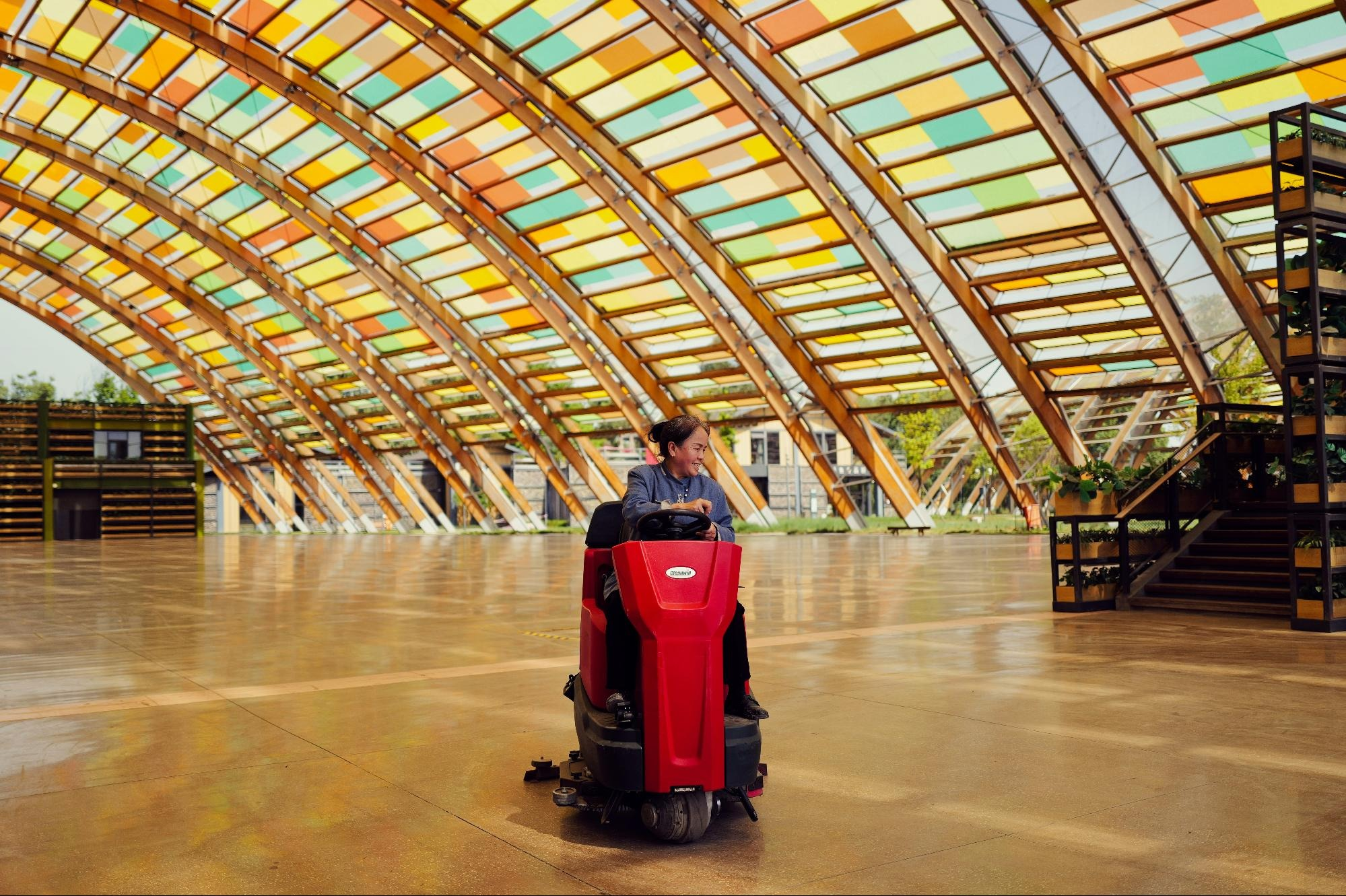
Common configurations include walk-behind floor scrubbers, ride-on floor scrubbers, and robotic floor scrubbers. These names describe how the machine is operated. The term scrubber dryer describes the cleaning function, so both walk-behind and ride-on machines can also be scrubber dryers.
The best setup depends on the facility layout. It also depends on the cleaning area. It depends on how dirty the area is. It depends on how often you clean. It depends on your operating window. It also depends on how much the operator can realistically be involved.
6 Practical Benefits of Industrial Floor Scrubbers
1. Clean Large Areas More Efficiently
A floor scrubbing machine uses powered brushes and continuous water recovery to clean while moving through the facility. Compared with repeated manual mopping, this reduces separate cleaning steps. It also helps the operator keep a steady pace in long aisles and open floor areas.
The productivity advantage becomes more important as the site grows. Warehouses, factories, logistics centers, and large commercial buildings often have short cleaning windows. Completing more floor space during each shift can improve operating efficiency.
2. Reduce Manual Cleaning Labor and Operating Cost
Manual scrubbing and mopping take a lot of physical effort and staff time. This is especially true when staff clean the same routes every day. An industrial floor scrubber cuts down on hand work for routine floor care. It lets operators focus on machine control, edge work, inspections, and other cleaning tasks.
Actual cost savings depend on labor rates, floor area, cleaning frequency, machine utilization, consumable use, and maintenance. For procurement teams, it is more helpful to compare total cleaning cost per shift or per square meter. Do not judge a machine only by its purchase price.
3. Deliver More Consistent Cleaning Results
Manual cleaning quality can vary with operator technique, fatigue, water changes, and the amount of time available. A commercial floor scrubber applies a more standardized combination of brush action, cleaning solution, and wastewater recovery. This makes the cleaning process easier to repeat across different shifts and larger work areas.
Consistency is important in facilities. Dust, tire marks, and residue can quickly change floor conditions. Heavy foot and vehicle traffic can also change floor conditions fast. A defined machine-cleaning routine also makes it easier for supervisors to set and verify cleaning standards.
4. Improve Floor Cleanliness and Facility Appearance
Industrial floor scrubbers remove dirt, dust, marks, and residue from hard floors.
They clean better than dry sweeping or basic mopping alone.
Regular machine cleaning can improve how warehouses, workshops, and retail back-of-house areas look. It can also improve customer-facing commercial floors.
For industrial buyers, appearance is not the only consideration. Cleaner floors make it easier to inspect the work area. They also help you spot new spills or damage. This keeps the operating environment more orderly.
5. Support Safer Post-Cleaning Floor Conditions
Wet floors can create slip risks and may force businesses to keep an area out of service until it dries. A scrubber dryer picks up dirty water as it cleans. It leaves less water behind than wet mopping. This can shorten the time before a cleaned area is ready for normal traffic.
Drying performance still depends on the squeegee condition, suction system, floor surface, machine setup, and operating speed. Buyers should review water-recovery performance in the machine specs. Do not assume every scrubber will dry the floor equally well.
6. Control Water and Cleaning Solution More Effectively
Modern scrubbers meter cleaning solution during operation and recover wastewater into a separate tank. This gives operators more control over how much water and chemical solution is used on each cleaning route and can reduce unnecessary dumping or repeated bucket changes.
For facilities trying to manage consumable cost and routine resource use, solution control, tank capacity, and recovery efficiency should be considered together. A larger tank is not automatically better if the machine becomes too large for the actual layout.
Where Are Industrial Floor Scrubbers Used?
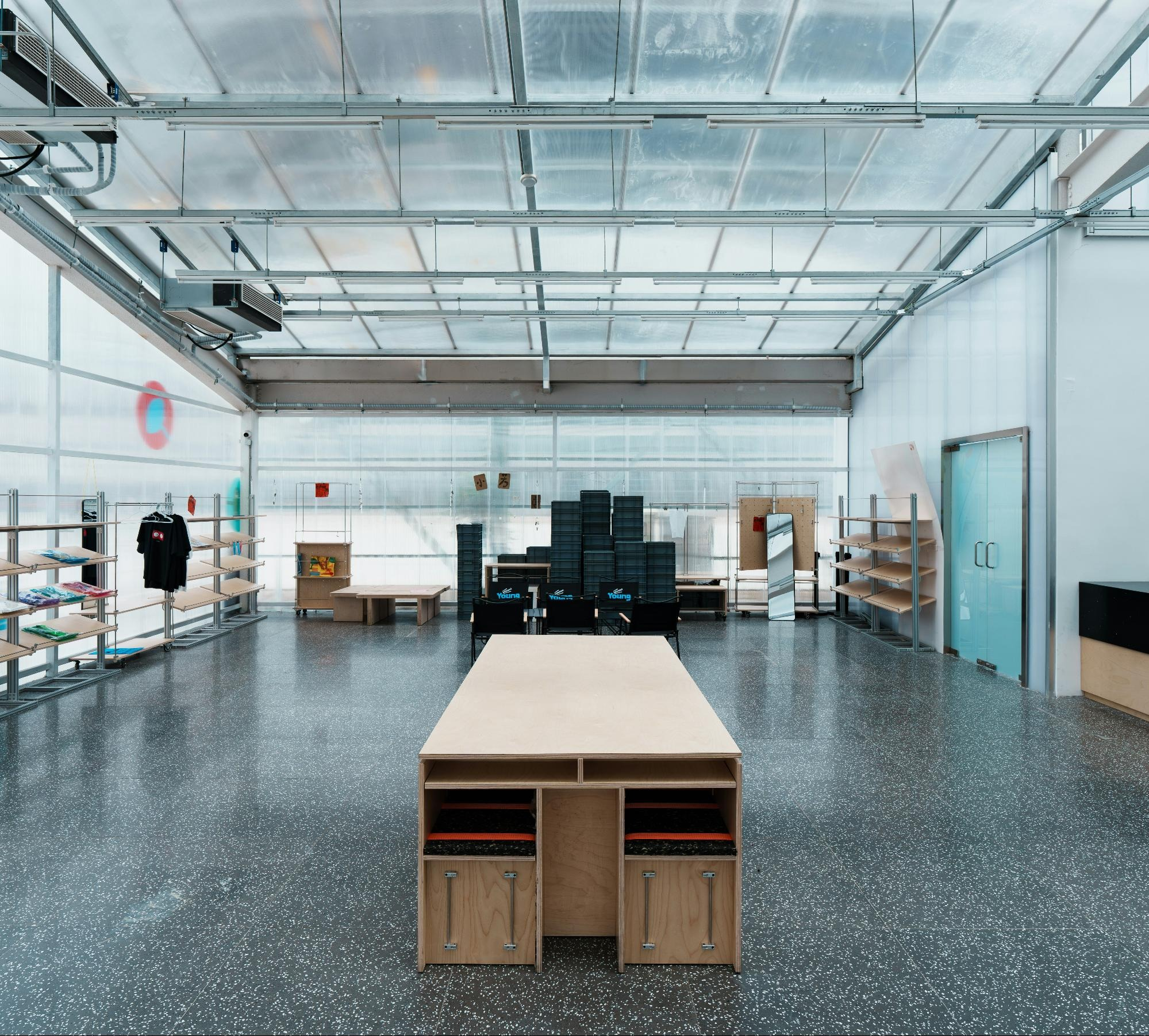
Industrial floor scrubbers are used wherever hard-floor areas are large enough, dirty enough, or cleaned frequently enough to justify mechanized cleaning. Typical applications include:
- · Warehouses and distribution centers — long aisles, loading zones, pallet traffic, and frequent dust.
- · Factories and manufacturing facilities — production residue, tire marks, dust, and scheduled cleaning windows.
- · Workshops and industrial plants — localized heavy soil, narrow operating zones, and mixed floor conditions.
- · Commercial buildings and retail facilities — high foot traffic, appearance requirements, and daytime cleaning constraints.
- · Parking areas and other large hard-floor spaces — wide coverage requirements and heavier debris or tracked-in dirt.
The operating environment should drive the specification. A machine that works well on a wide warehouse floor may be unnecessarily large for a workshop with tight corners, while a small walk-behind unit may create excessive labor time on a very large distribution floor.
Walk-Behind vs Ride-On vs Robotic Floor Scrubbers
Walk-Behind Floor Scrubber
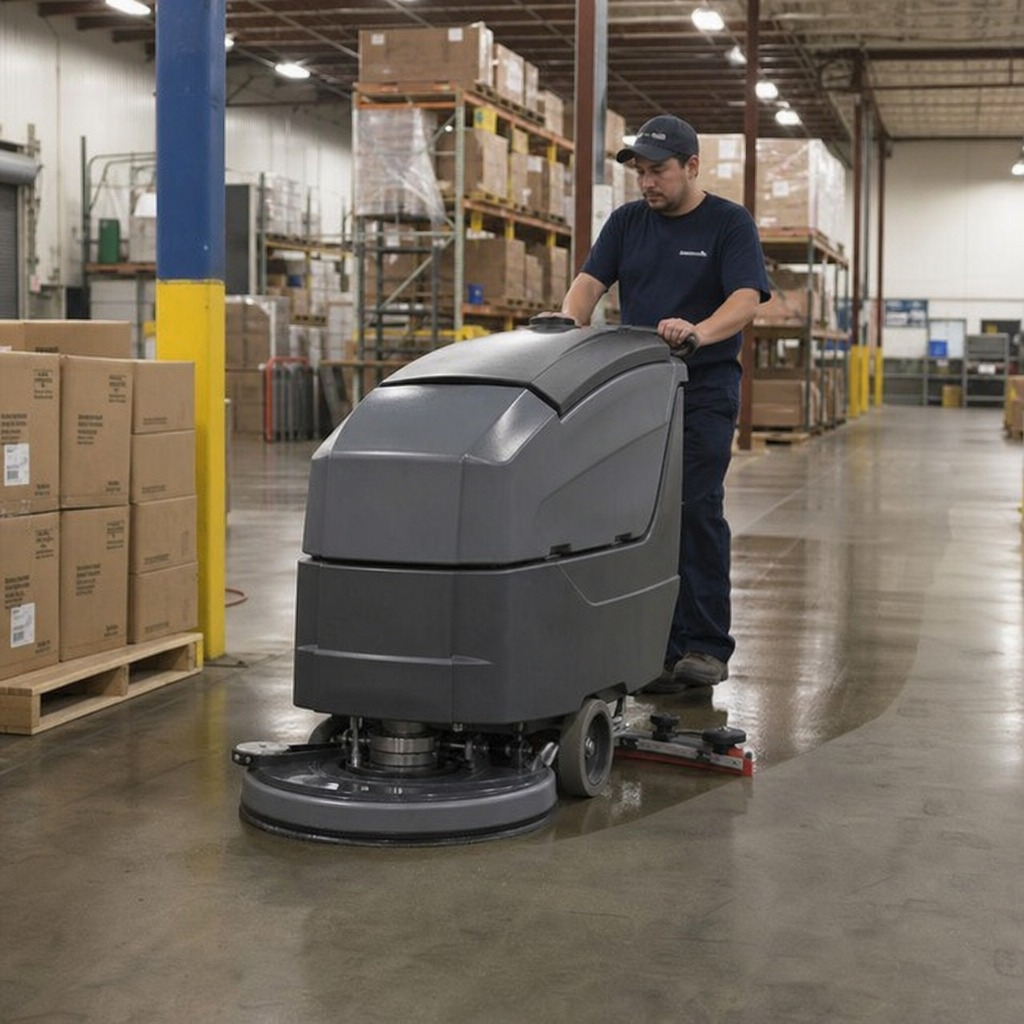
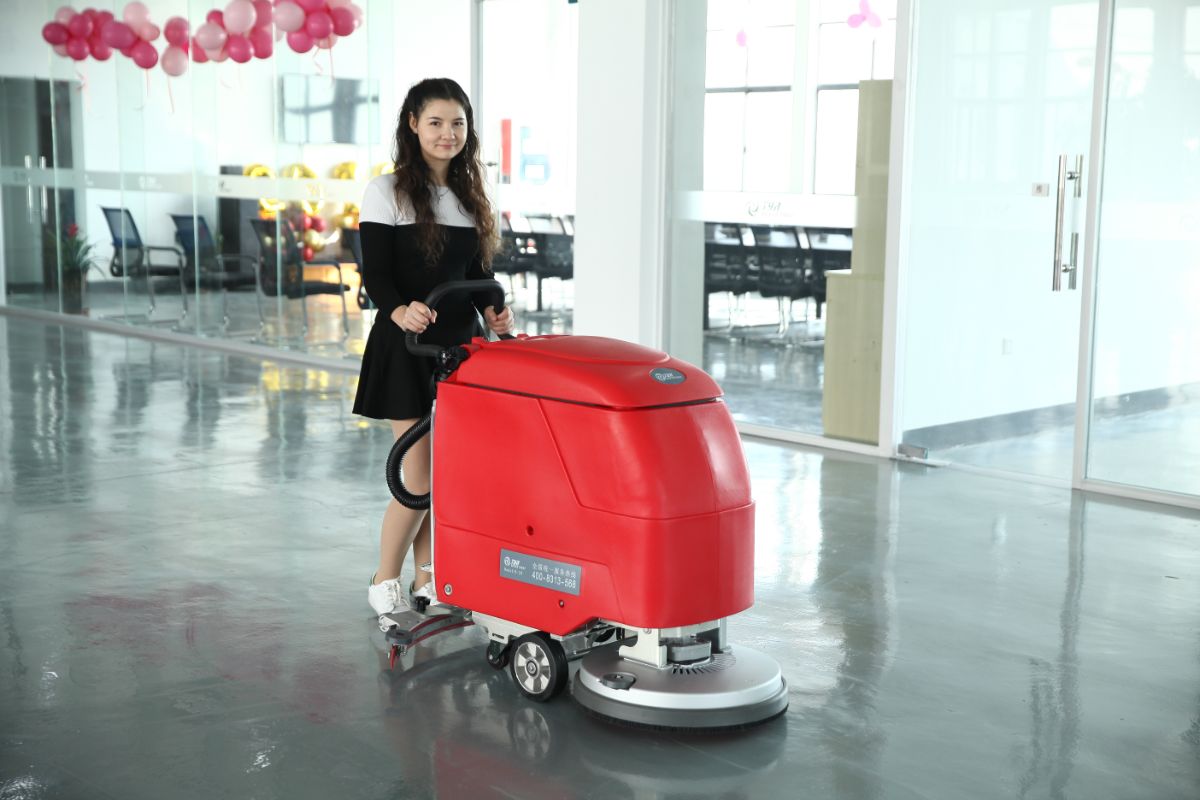
A walk-behind floor scrubber is usually the more practical option for small and medium-sized cleaning areas, narrow aisles, rooms with frequent obstacles, or facilities where maneuverability matters more than maximum coverage. The operator walks behind the machine and can make frequent direction changes in tighter spaces.
Ride-On Floor Scrubber
A ride-on floor scrubber is designed for larger, more open facilities where cleaning productivity and operator fatigue are important considerations. The seated operating position helps cover long routes more efficiently, but buyers must also consider turning radius, aisle width, storage space, charging location, and access through doors or elevators.
Robotic Floor Scrubber
A robotic floor scrubber adds automated navigation and route execution to the scrubbing process. It can be useful in facilities with repeatable layouts and predictable cleaning zones, particularly when the goal is to reduce routine operator involvement. However, automation suitability depends on site mapping, traffic patterns, obstacle management, supervision requirements, and how often the environment changes.
Where Does a Scrubber Dryer Fit?
“Scrubber dryer” is a functional description rather than a separate operator format. A walk-behind machine, a ride-on machine, or some robotic models may all be scrubber dryers if they scrub the floor and recover wastewater in the same pass. This distinction is useful when comparing suppliers because product names are not always standardized.
How to Choose the Right Industrial Floor Scrubber
A procurement decision should begin with the cleaning task, not with the biggest machine or the highest theoretical productivity figure. Before shortlisting an industrial floor scrubber, define the following operating requirements:
- · Total floor area and the portion that must be cleaned in each shift.
- · Aisle width, turning space, ramps, thresholds, doors, and fixed obstacles.
- · Floor material, surface condition, and the type of soil or residue to be removed.
- · Required cleaning frequency and the available cleaning window.
- · Cleaning width, brush or pad configuration, and required scrubbing pressure.
- · Solution and recovery tank capacity relative to refill and dump points.
- · Battery runtime, charging time, charger location, or other power requirements.
- · Operator skill level, ergonomics, training, and daily inspection requirements.
- · Availability and cost of brushes, pads, squeegees, batteries, filters, and service support.
- · Expected total operating cost over the planned service life.
As a practical rule, walk-behind machines are usually easier to justify where maneuverability and compact storage are priorities. Ride-on machines become more attractive as open floor area and daily cleaning distance increase. Robotic models should be evaluated where routes are repetitive enough for automation to deliver a measurable labor or scheduling benefit.
How to Compare Floor Scrubber Models Before Purchase
Specification sheets are useful, but B2B buyers should compare machines against the same site conditions. Ask suppliers to explain how the model will perform on your floor type, soil level, operating hours, and aisle layout. Important comparison points include:
- · Practical cleaning productivity, not only theoretical square-meter-per-hour figures.
- · Cleaning path width versus overall machine width and turning radius.
- · Brush system, pressure, and suitability for the target floor and contamination.
- · Water pickup, squeegee design, and expected residual moisture after cleaning.
- · Battery technology, usable runtime, charging process, and replacement cost.
- · Tank access, daily cleaning tasks, service intervals, and downtime for routine maintenance.
- · Consumable availability, spare parts, warranty terms, technical support, and operator training.
A useful supplier discussion should end with a machine recommendation tied to your actual cleaning route and operating cost assumptions. If two models are close in price, the better choice is usually the one that fits the site with fewer compromises in maneuverability, runtime, maintenance, and operator workload.
Maintenance Tips for Industrial Floor Scrubbers
Regular maintenance protects cleaning performance and reduces avoidable downtime. A basic routine should include:
- · Inspecting and cleaning brushes or pads after use.
- · Checking squeegee blades for wear, damage, and correct contact with the floor.
- · Emptying and rinsing recovery and solution tanks as required.
- · Removing debris from filters, hoses, and the machine body.
- · Checking battery condition, terminals, charging practice, and ventilation requirements.
- · Following the manufacturer’s schedule for moving parts, vacuum components, and periodic service.
Maintenance should be included in the purchasing decision because parts access, daily cleaning time, and service response can affect the machine’s real availability just as much as its rated productivity.
Is an Industrial Floor Scrubber Worth It?
For facilities with large or frequently cleaned hard-floor areas, an industrial floor scrubber can improve cleaning productivity, reduce repetitive manual work, make results more consistent, and support faster water recovery after cleaning. The business case becomes stronger when the machine is correctly matched to the site and used often enough to offset ownership and maintenance costs.
If you are comparing an industrial floor scrubber machine for a warehouse, factory, distribution center, workshop, or commercial facility, start with the floor area, cleaning window, aisle geometry, soil type, and power requirements. Then compare walk-behind floor scrubber and ride-on floor scrubber options on practical productivity, operator workload, serviceability, and total operating cost rather than purchase price alone.
For the next step, review the Floor Scrubber product range and shortlist models that match your site conditions. When requesting a quotation, provide the approximate cleaning area, floor type, aisle width, cleaning frequency, and preferred power or battery setup so the supplier can recommend a machine configuration based on the actual application.
Post time: Aug-18-2026