

Introduction
For many facility managers, floor cleaning is not simply a maintenance task. It directly affects workplace safety, operational efficiency, and the overall working environment.
In factories, warehouses, and commercial facilities, floors are exposed to dust, oil residue, production debris, and heavy daily traffic. As the cleaning area increases, traditional methods such as manual mopping become less efficient due to higher labor requirements and inconsistent cleaning results.
An industrial floor scrubber provides a more effective approach by combining scrubbing and drying functions in a single operation. However, selecting the right machine requires careful consideration of factors such as floor area, surface condition, cleaning frequency, and operating costs.
This guide explains how industrial floor scrubbers work, the main types available, and the key factors businesses should consider before making a purchase decision.
What Is an Industrial Floor Scrubber?
An industrial floor scrubber is a professional cleaning machine designed for cleaning large hard floor surfaces in industrial and commercial environments.
It is also commonly known as a scrubber dryer, because it not only removes dirt from the floor but also collects wastewater during the cleaning process.
Unlike traditional cleaning methods that mainly depend on manual labor, an industrial floor scrubber uses mechanical cleaning technology to perform three main functions:
- · Applying water and cleaning solution
- · Scrubbing the floor surface with brushes or pads
- · Recovering dirty water through a vacuum and squeegee system
By combining these processes, the machine can clean and dry floors in one pass, helping facilities improve cleaning efficiency and maintain a safer working environment.
How Does an Industrial Floor Scrubber Work?
Although different models may vary in design and configuration, most industrial floor scrubbers operate through a similar cleaning process.
1. Applying Cleaning Solution
The solution tank releases water and detergent onto the floor surface.
The amount of solution can usually be adjusted depending on:
- · Floor condition
- · Level of contamination
- · Cleaning requirements
For example, a warehouse with normal dust accumulation may require different settings compared with a manufacturing facility dealing with oil or heavier residues.
2. Mechanical Floor Scrubbing
The brush or pad rotates against the floor surface to remove dirt, stains, and buildup.
Cleaning performance depends on several factors, including:
- · Brush type
- · Brush pressure
- · Machine speed
- · Floor material
Different applications may require different brush systems to achieve the best results.
3. Water Recovery and Drying
After the floor has been scrubbed, the squeegee system collects the dirty water from the surface.
The vacuum motor then transfers the wastewater into the recovery tank, leaving the floor cleaner and safer for immediate use.
This scrubbing and drying process is one of the main advantages of industrial floor scrubbers compared with traditional cleaning methods.
Main Types of Industrial Floor Scrubbers
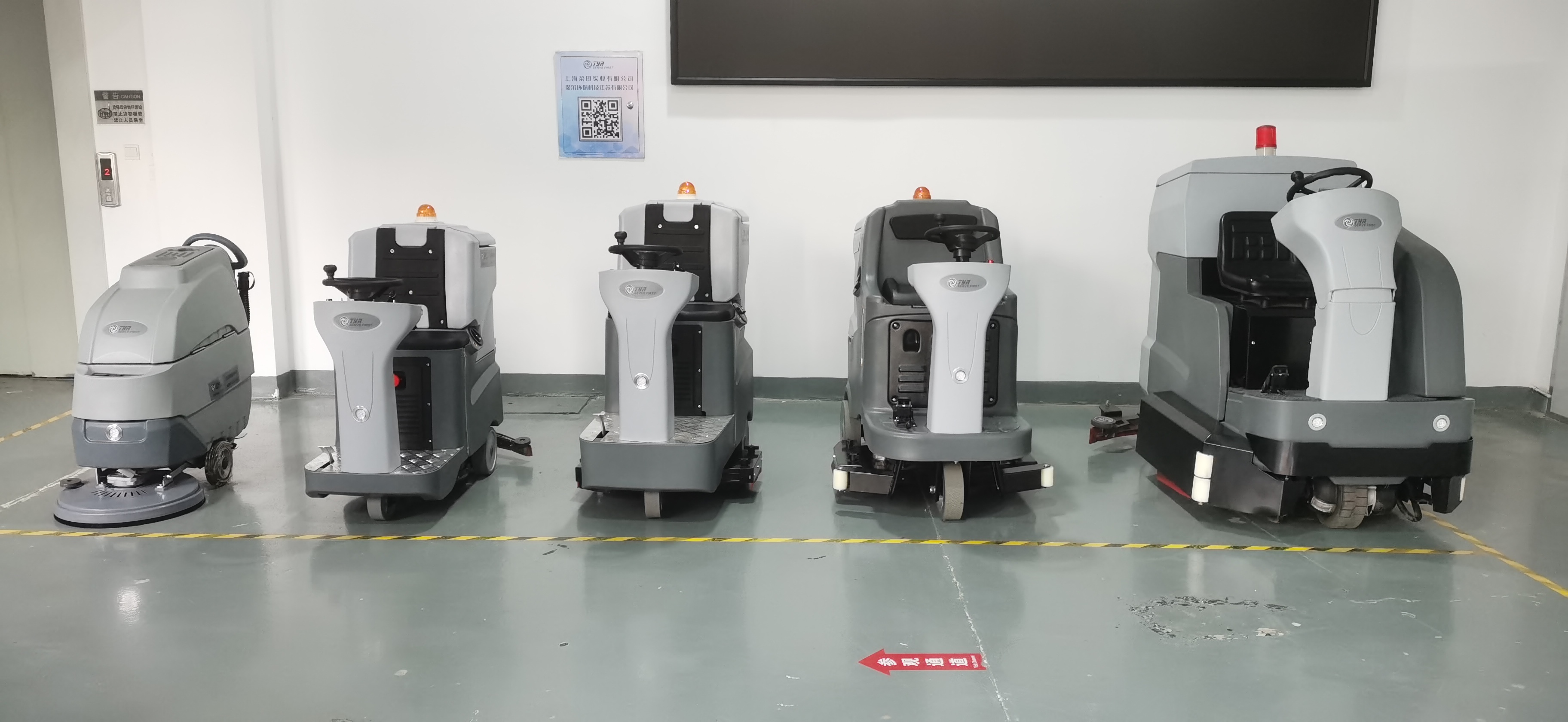
Industrial floor scrubbers are mainly divided into two common categories: walk-behind and ride-on models.
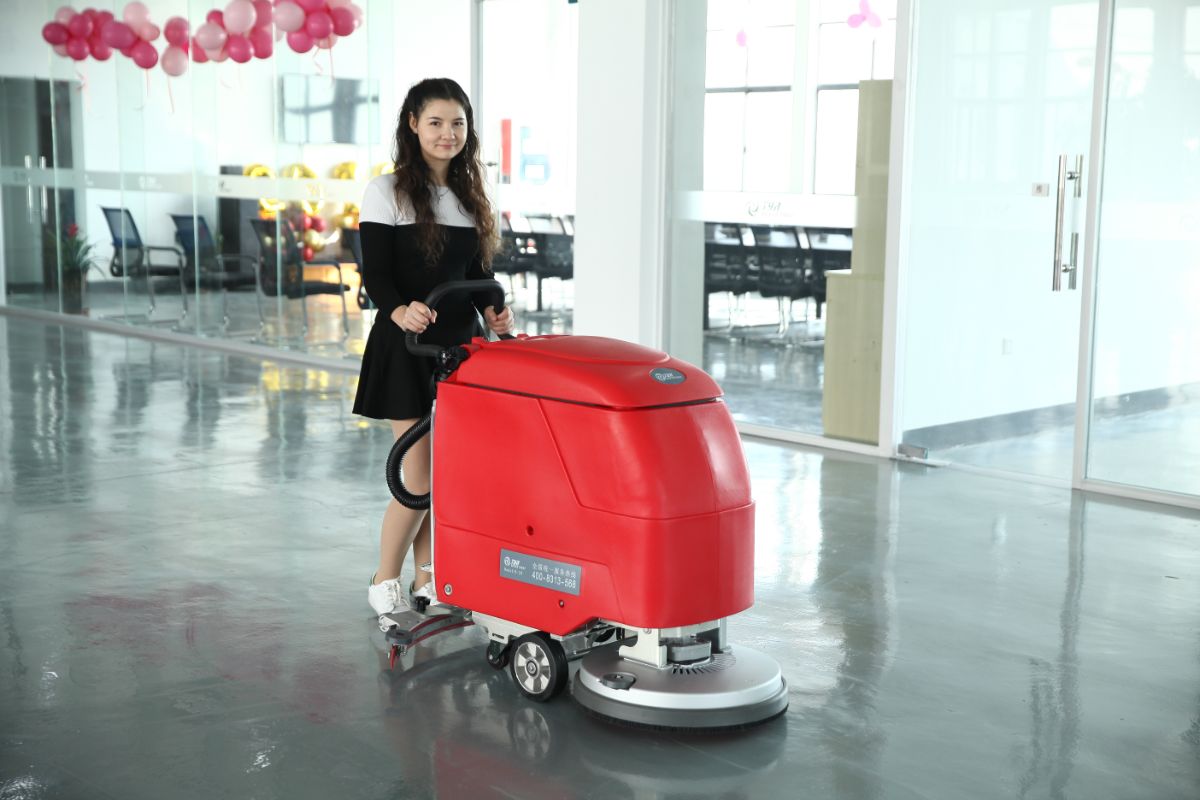
Walk-Behind Floor Scrubbers
Walk-behind floor scrubbers are operated by an operator walking behind the machine.
They are commonly used in:
- · Small and medium-sized factories
- · Workshops
- · Retail spaces
- · Facilities with narrow areas or frequent obstacles
Their main advantages include:
- · Easy operation
- · Better maneuverability
- · Lower initial investment
For facilities with limited cleaning areas, a walk-behind scrubber can provide an efficient and practical cleaning solution.
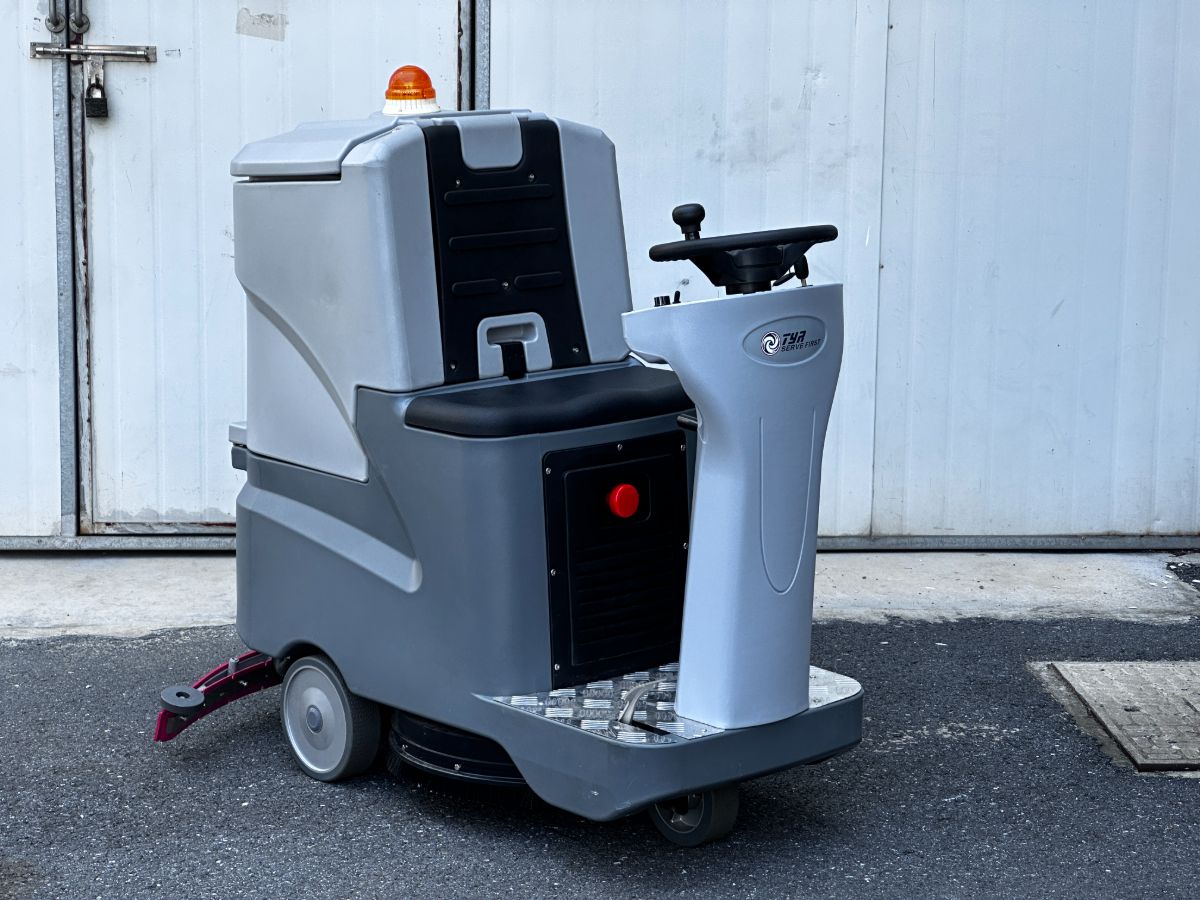
Ride-On Floor Scrubbers
Ride-on floor scrubbers allow operators to sit on the machine during operation.
They are designed for larger areas such as:
- · Warehouses
- · Logistics centers
- · Manufacturing plants
- · Large commercial buildings
Compared with walk-behind machines, ride-on models usually offer:
- · Higher cleaning productivity
- · Wider cleaning paths
- · Longer operating capability
- · Improved operator comfort
For large facilities where cleaning time and labor efficiency are important, ride-on scrubbers are often the preferred choice.
Key Factors When Choosing an Industrial Floor Scrubber
Choosing a floor scrubber should be based on actual operating conditions rather than simply comparing machine prices.
1. Facility Size and Cleaning Productivity
The size of the cleaning area directly affects the required machine capacity.
Important specifications include:
- · Cleaning width
- · Cleaning speed
- · Tank capacity
- · Working time
A larger cleaning path can significantly improve productivity in warehouses and large factories.
However, a larger machine is not always the best choice. Facilities with narrow passages or many obstacles may benefit more from a compact model with better maneuverability.
2. Floor Type and Surface Conditions
Different floors require different cleaning approaches.
Common industrial floor surfaces include:
- · Concrete
- · Epoxy-coated floors
- · Tile
- · Other hard flooring materials
Facilities should consider whether the main cleaning challenge is dust, oil, grease, stains, or general daily maintenance.
The correct brush type and machine configuration can greatly affect cleaning performance.
3. Cleaning Frequency
A facility that requires daily cleaning will have different requirements compared with one that only needs occasional maintenance.
For frequent operation, businesses should pay attention to:
- · Battery runtime
- · Machine durability
- · Maintenance requirements
- · Spare parts availability
A reliable machine can reduce downtime and improve long-term operating efficiency.
4. Total Operating Cost
The purchase price is only one part of the investment.
Businesses should also consider:
- · Energy consumption
- · Replacement brushes and squeegees
- · Maintenance costs
- · Operator efficiency
In many cases, a machine with better productivity can provide a lower total cost of ownership over its service life.
Common Mistakes When Choosing a Floor Scrubber
Choosing Only Based on Purchase Price
The lowest-priced machine may not always be the most economical choice.
A cheaper machine may result in higher long-term costs if it has lower productivity, more frequent maintenance, or limited spare parts support.
Ignoring Floor Conditions
Selecting a machine without considering the actual floor environment can lead to poor cleaning results.
Factors such as floor material, dirt type, and cleaning frequency should always be evaluated before purchasing.
Selecting the Wrong Machine Size
A machine that is too small may increase cleaning time, while an oversized machine may reduce flexibility in smaller areas.
The best choice is the machine that matches the facility’s real cleaning requirements.
Where Are Industrial Floor Scrubbers Used?
Industrial floor scrubbers are widely used in many industries.
Manufacturing Facilities
Factories often use floor scrubbers to remove dust, production residue, and other contaminants while maintaining a clean working environment.
Warehouses and Logistics Centers
Large warehouse floors require efficient cleaning solutions due to frequent movement of forklifts, vehicles, and personnel.
Commercial Facilities
Shopping centers, supermarkets, and public buildings use floor scrubbers to maintain clean and professional-looking floors.
Choosing the Right Industrial Floor Scrubber Supplier
When purchasing an industrial floor scrubber, companies should evaluate more than just machine specifications.
Important factors include:
- · Manufacturing experience
- · Product reliability
- · Technical support
- · Spare parts availability
- · Customization capability
Working with an experienced manufacturer helps businesses select equipment that matches their cleaning requirements and long-term operational goals.
As an industrial cleaning equipment manufacturer, TYR provides floor scrubber and floor cleaning solutions for factories, warehouses, and commercial applications. With direct manufacturing capability and customization options, TYR supports customers looking for reliable cleaning equipment for different working environments.
Post time: Aug-05-2026