

Maintaining a clean, dust-free environment in large-scale facilities across North America is no longer just about aesthetics—it is a critical operational standard. From busy logistics hubs in California to heavy manufacturing plants in Ontario, facility managers are facing rising labor costs, strict union safety regulations, and aggressive health mandates. To stay competitive, modern operations are shifting toward advanced, mechanized industrial floor sweeper solutions to optimize their floor maintenance workflows.
Why Facilities are Upgrading to Mechanized Sweeping
The global floor cleaning equipment market is expanding rapidly, with projections reaching USD 22.66 billion by 2030, driven by escalating commercial infrastructure and rising global hygiene standards. In this landscape, manual push brooms simply cannot match the scale required by modern infrastructure.
Whether managing a bustling logistics hub or a high-traffic retail plaza, selecting the right commercial warehouse floor cleaning equipment depends entirely on the footprint of your facility:
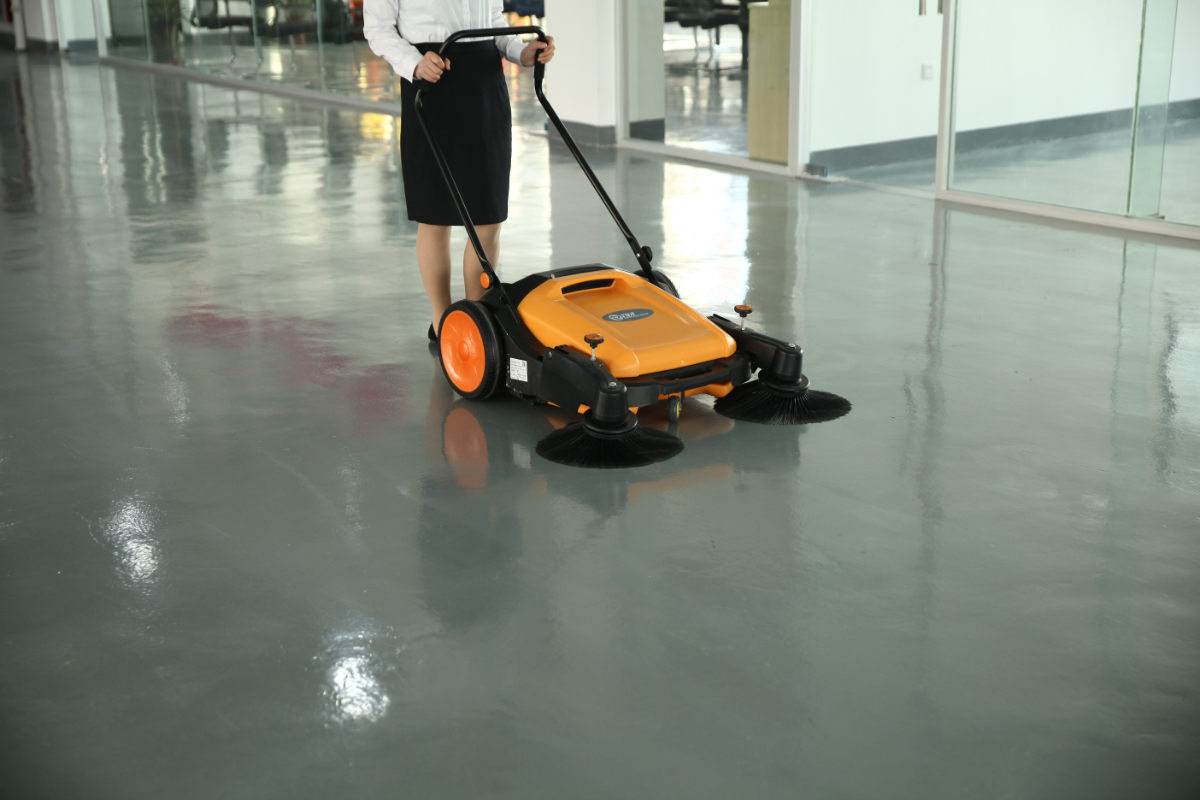
- ● Walk-Behind Industrial Floor Sweepers: Best suited for compact to mid-sized spaces (under 50,000 sq. ft.). These highly maneuverable units are ideal for clearing dust, debris, and spills from tight manufacturing aisles, commercial corridors, and edge zones.
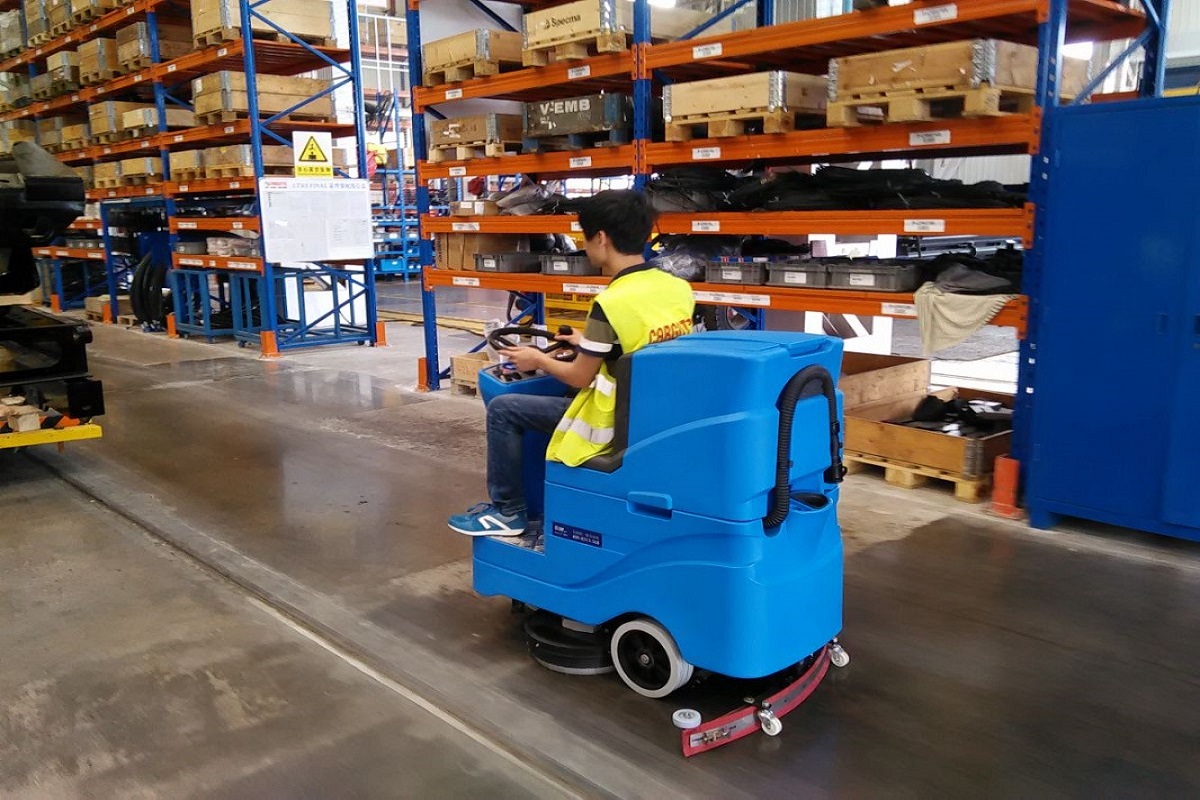
- ● Ride-On Battery Powered Sweepers: Designed for heavy-duty, large-scale footprints (over 50,000 sq. ft.). A ride-on floor sweeper allows a single operator to cover massive areas comfortably, making them the standard choice for expansive factories, airports, and regional distribution centers.
The Business Benefits: Industrial vs. Commercial Applications
Mechanized sweepers provide a direct return on investment by solving the core operational and regulatory challenges of industrial and commercial floor maintenance:
1. Heavy-Duty Industrial Environments (Factories & Warehouses)
In manufacturing plants and automotive warehouses, debris like wood shavings, metal scraps, pallet chips, and fine concrete dust accumulates hourly.
- ● The Benefit: Advanced industrial sweepers feature multi-stage filtration systems that capture both heavy debris and microscopic particulates.
- ● The Regulatory Impact: These machines serve as highly effective OSHA silica dust compliance solutions. By containing airborne respirable crystalline silica at the point of collection, they protect sensitive machinery from grit damage, prevent product contamination, and shield businesses from costly regulatory penalties while ensuring worker health.
2. High-Traffic Commercial Spaces (Retail & Parking Structures)
Commercial venues like shopping malls, transit hubs, and outdoor parking structures require consistent, fast-paced cleaning that doesn’t disrupt foot traffic or generate toxic exhaust fumes.
- ● The Benefit: Utilizing zero-emission battery power and wide side brooms, heavy duty outdoor parking lot sweepers sweep right up against walls and curbs in a single pass.
- ● The Impact: They deliver predictable, streak-free cleanliness scores, ensuring a pristine public image for retail brands while maintaining 24/7 operational uptime.
Data-Driven Efficiency: The ROI of Machine Sweeping
The financial argument for switching from manual labor to an industrial sweeping machine is rooted in productivity data:
| Cleaning Method | Cleaning Capacity (Average) | Efficiency Multiplier | Debris Capture Consistency |
| Traditional Push Broom | ~500–800 $m^2$/hr | 1x (Baseline) | Variable (Misses 15–25% in corners) |
| Walk-Behind Sweeper | ~2,500–3,500 $m^2$/hr | 3.5x to 4.5x | High (Constant mechanical brush rotation) |
| Ride-On Sweeping Machine | ~8,000–9,800 $m^2$/hr | 8.5x to 12x+ | Maximum (High-capacity hopper & vacuum) |
The Labor Math: According to independent industrial cleaning audits, manual sweeping performance drops significantly over a shift due to operator fatigue, often missing up to 25% of debris in low-traffic or tight edge zones. In contrast, a motorized sweeper maintains a constant brush speed and suction power, delivering the exact same deep-clean quality in hour eight of a shift as it does in hour one.
For a typical 30,000 sq. ft. facility, manual cleaning requires up to 7.5 hours of daily labor. Switching to a compact battery-powered sweeper cuts that time down to under an hour. In a North American labor market where commercial cleaning wages average over $15–$20/hour, operations typically achieve full equipment payback within a 12-to-18 month window.
Choose Cntyrclean: Your Partner in Professional Floor Care
As a dedicated developer and manufacturer in the environmental cleaning equipment sector, 提尔环保科技有限公司 (TYR Environmental Technology) provides tailored, high-performance cleaning solutions for global industrial and commercial clients via our international portal, cntyrclean.com.
We specialize in engineering rugged, high-capacity walk-behind sweepers and high-efficiency ride-on sweeping machines built to withstand harsh factory floors and high-frequency commercial environments. By integrating advanced dust-suppression technologies, extended battery runtimes, and ergonomic designs, TYR floor cleaning machines help businesses minimize labor dependencies, slash operational costs, and maintain elite facility compliance standards.
Explore our full range of intelligent floor maintenance machinery and request a custom quote today at cntyrclean.com.
Post time: Jul-17-2026