

The tightest spot on a cleaning route is often the turn at the end of a rack aisle. A machine can fit between the racks and still leave the operator too little room to turn back. Before you book a demo, walk the route from the equipment storage area to the last row of racks. Bring a tape measure and a sketch pad.
1. Measure the clear doorway opening
Open the narrowest door as far as it normally opens during a cleaning shift. Measure the gap the machine actually passes through. A door leaf, frame or guard can take up part of the opening.
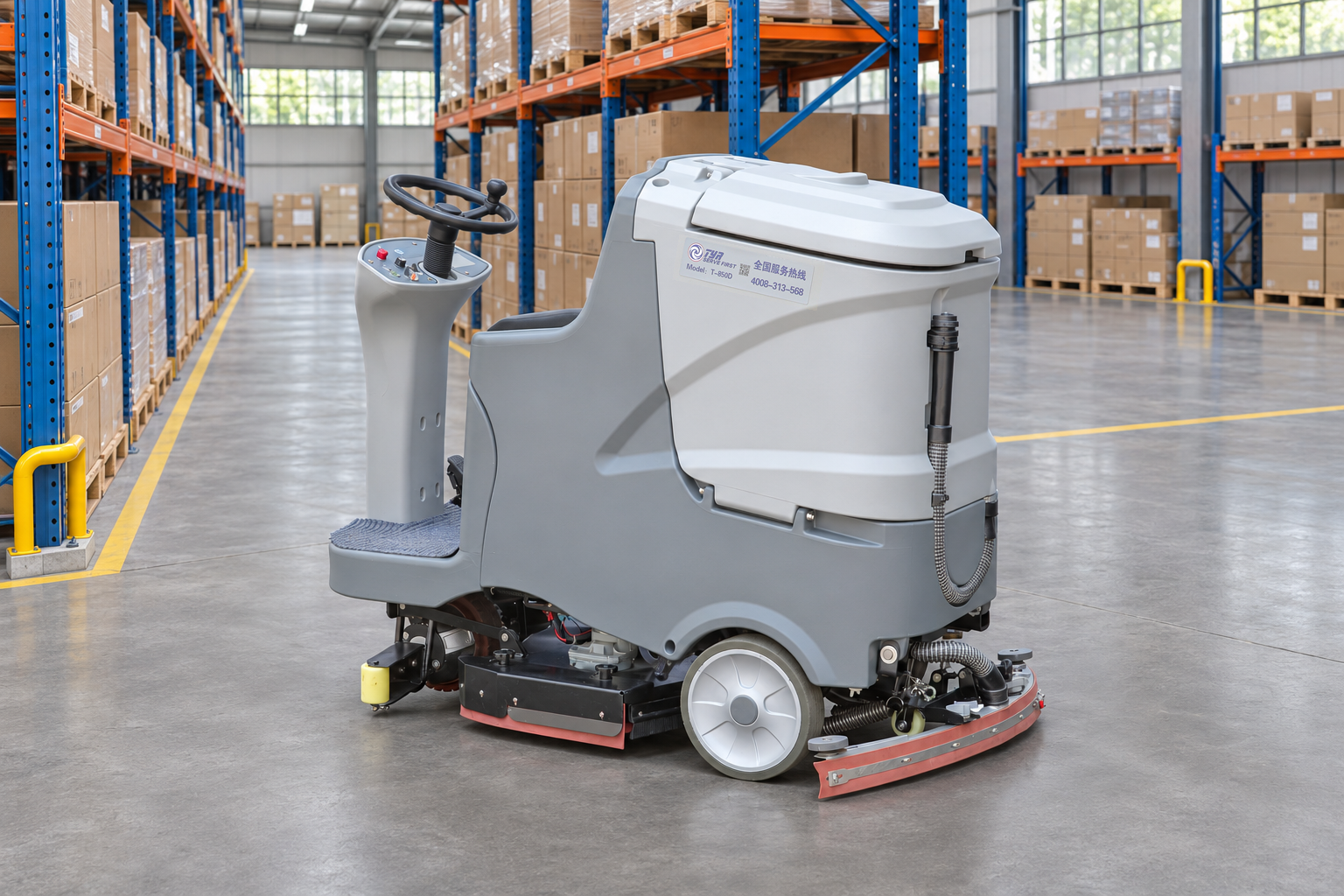
Ask the supplier for the widest point of the scrubber in the configuration you’ll use to pass through that door. Cleaning width tells you the strip of floor scrubbed in one pass. On some models, the rear squeegee extends beyond the scrub head.
2. Find the tightest point between loaded racks
Measure the usable aisle where it narrows most. Look for rack guards at floor level, columns and pallet loads that extend beyond the rack. Write down what limits the space so you can reproduce the conditions during a demo.
Allow for the operating clearance your site requires. A few inches left on paper can disappear when a load sits farther out than usual.
3. Sketch the turn at the end
Does the operator make a U-turn back down the aisle or turn 90 degrees into a cross aisle? Sketch the movement and measure the clear space in both directions. If pallets are staged at the rack end during cleaning hours, measure from the edge of the occupied space.
For a U-turn, ask for the minimum aisle-turn width for the exact model and configuration. For a corner, share your sketch with the supplier. If clearance is close, have a trained operator demonstrate the maneuver under your site’s operating rules.
Comparing two machines? Send TYR the clear door opening, the narrowest usable aisle width and a sketch of the turn with both dimensions marked. Those details give us something concrete to check against each model.
Post time: Nov-27-2026